1949

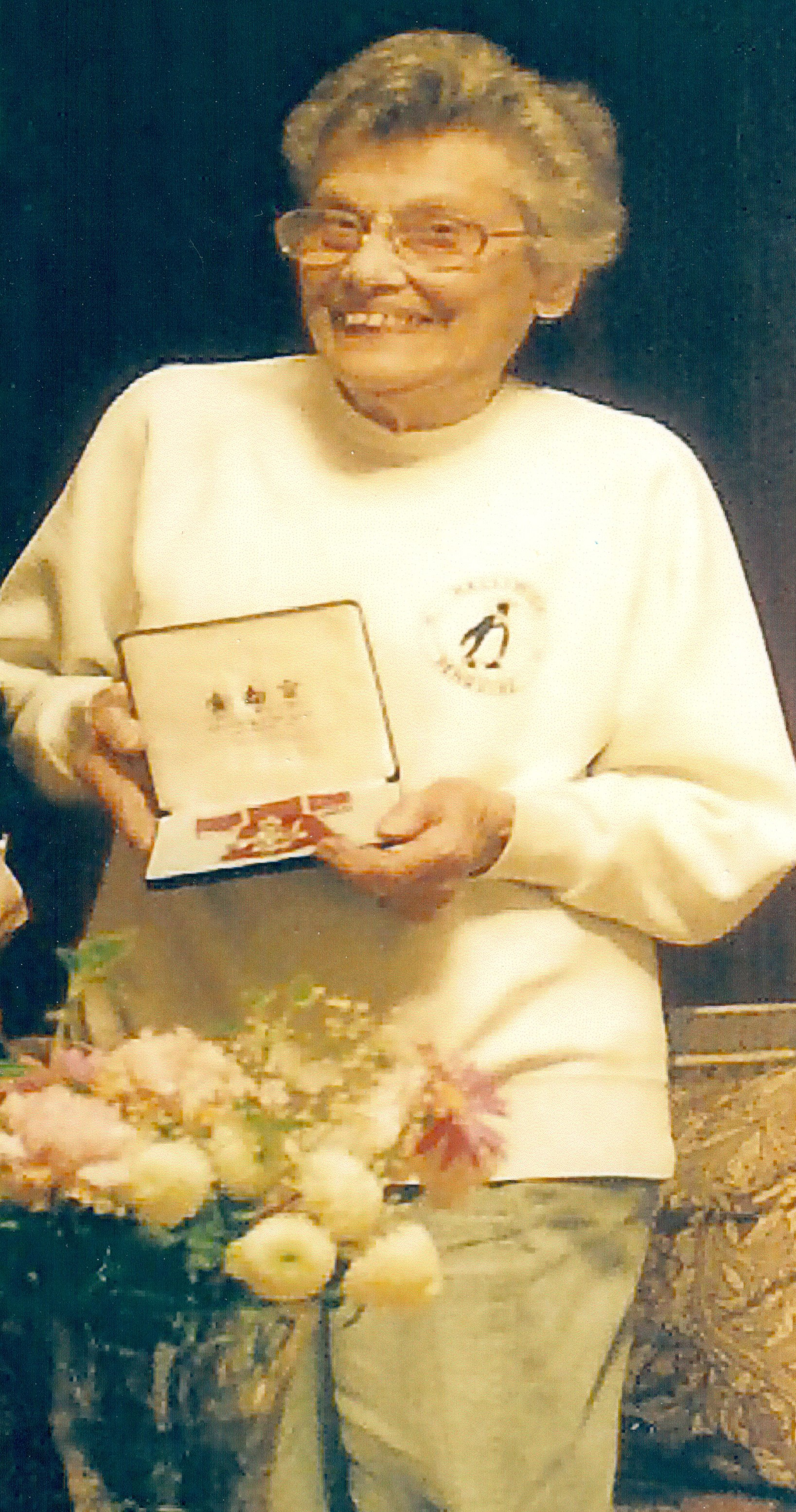
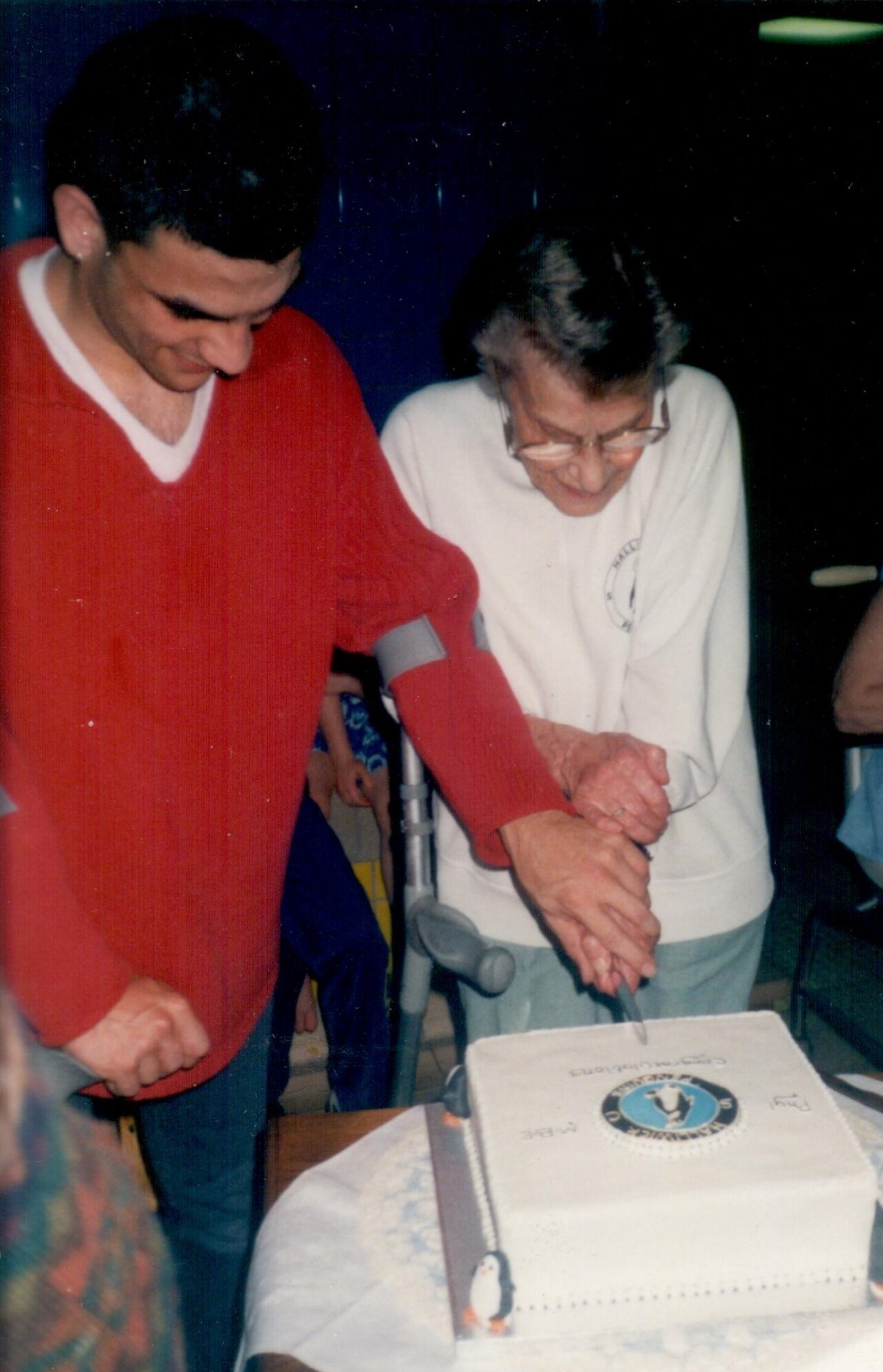
In 1949, Southgate Seals Swimming Club in London promoted a swimming gala for a local charity - ‘The Halliwick School for Crippled Girls'. Six of the girls were invited to attend. Mac, as club coach, organised the gala, and Phyll had the job of looking after the girls.

While discussing the gala on the bus home - no car then! -Mac asked how the girls enjoyed it. Her reply was, "The look on their faces told her that two were bored stiff 'what's it got to do with me and my life?'", and the other faces said plainly 'If only! if only we could get in there and do that!'"

Mac was quiet for a long while (which did not often happen) and then he said, quite suddenly. "Why not?" They did a lot of thinking and talking during the next week. The girls were children just like ours, so why shouldn't they have a sport and wasn't water an ideal playground? So Mac talked to Matron, who consulted their Honorary Surgeon - two wonderful people, Kathleen Alford and Oliver Vaughan Jackson - who considered and then approved the scheme, although everyone else thought we were quite mad to start it.

1950

Their intention was to integrate the girls with Southgate Seals Juniors, but people were not ready for that in 1950. We were informed that 'cripples' could not swim with 'normal' children!! So we were given a private session at the pool and it was only through a slip-up by the local Authority a few years later that we welcomed 'Normal' children into our club.

But, going back to the first swim! Oliver Vaughan Jackson agreed for 12 girls to start. Each had a differing disability. You name it – we had one! After a wonderful time (for them) splashing around and a promise that they could come again next week, they went home tired but happy with Mac saying, "We now have to get working a method of teaching, and a method that will be able to be applied to ALL DISABILITIES"

1950/1951

The years 1950-51 saw important developments. It was obvious from week one that the five of them - Mac, George, Pat, Geoff and Phyll - needed to enlist further help; so a rota of cars and drivers was set up, and the Wood Green Trefoil Guild kindly provided helpers in the changing room. This left us free for the water work.

At that time, Mac was catching up on his engineering studies (interrupted by seven years in the RAF) and he quickly realised that the principles of water - hydrodynamics and hydrostatics - and the knowledge given to us by all the scientists such as Archimedes, Bernoulli, Pascal, etc was the basis we needed for interrelating bodies of varying shapes and sizes with water - with control, skill and safety in that element.

Their first 12 girls were aged between 9 and 15 and all through that first year we learned from them, as they learned from us. They were their 'guinea pigs'. They started a diary, which I still have and will always treasure. In this, they would write their achievements; later this was laughingly called "The Boasting Book". It did, however, give them valuable comeback, with entries like "I swam two widths ON MY OWN" – "Two lengths WITHOUT HELP" - "Four widths WITH NO-ONE WITH ME". This showed them the importance of Point Two (Disengagement) and of our maxim - Help-is-only-help-if-it-is-needed!! Independence is still highly prized.

The need for Rotational Skills and control was emphasised by the problem for one swimmer, an achondroplasic, or dwarf. From tears to smiles, she finally conquered Lateral Rotation. For all their swimmers, with their asymmetric shapes, finding and controlling balance was essential in the learning programme; and as flotation aids such as rings and armbands in no way help in achieving this, they have never been considered.

So gradually the teaching plan developed, embracing the swimmers' need for safe and happy progress in the water. Because of the involvement of their swimmers, and their agreement that all helpers used only ‘first names', Mac named the Ten Teaching Points ‘THE HALLIWICK METHOD'.

With two aims in mind - ability and normality - they set out to develop the ability in the water, which rarely relates to the Disability on land. Normality demanded they form a swimming club - with a name! Everyone was happy with 'Penguins' (not very mobile on land, but wonderful in the water!) and so, with the name of their school included, it was affiliated to the ASA as the Halliwick Penguins Swimming Club. This was the first swimming club with a teaching method embracing ALL disabilities.

In line with normality in swimming clubs, the year finished with their first gala. Though small by today's standards, events included: club 100yds; one length backstroke; two widths freestyle; Novices width; three times one length relay; blowing-the-ping-pong-ball; diving (from bathside & springboard); walking width; and plunging (the winning distance being 18 feet 4 inches). Five certificates for 100 yards were presented. The rest of the school came down to watch - and guess what happened next!! By the end of 1951, fifteen more girls were added to the swimming register. Transport was provided free by Universal Coaches, with their staff driving voluntarily on rota.

Group teaching next developed mainly to grade the progress of each swimmer through the 'Ten Points', but also as a means of training new helpers. Also, there was more fun and challenge in working one-to-one within a group of five or six swimmers. The group leaders set their programmes, checked by the chief instructor and games were constructed as a way of furthering each teaching point. This was when kangaroo jumps came into being (invented by our daughter, then aged six, who called them 'Robin Hops') as both knees are lifted so there is no contact with gravity and the pool-floor.

1952

Berthe Bobath visited them during their first year and enjoyed being a Halliwick instructor for a day. Soon after, they had three volunteers who were in training for the Helsinki Olympics. One was a diver, so the swimmers added diving to their achievements. The chairman of the school governors was so astounded by the diving event in the 1952 gala that he presented the club with a diving trophy (springboard and five foot firmboard).

Two swimmers left school during that year; one went to the local baths to show her Mum what she could do - and was refused admission. In May 1952 The Association of Swimming Therapy was founded. How quickly requests poured in for guidance in starting similar clubs was amazing!

To promote and expand the Halliwick Method, the inaugural meeting of the Association of Swimming Therapy was held in May 1952 at Halliwick School. Those present included Alderman Harold Fern, Secretary of ASA, many representatives from the medical field and from organisations for the Handicapped.

They were still tied by the Local Authority for the Penguins to remain a 'closed club', so how and where to start! Mac decided to 'GO-FOR-IT!' So in August 1952. the Optimists SC - an open club in the centre of London for all ages and all disabilities - was started. (The manager of Ironmonger Row Baths was so interested that he came to all the swims and personally provided the hot drinks for the swimmers.)

The first members came from the Infantile Paralysis Fellowship and the children of the newly formed Association of Parents of Spastic Children (later to become The Spastics Society, & more recently, Scope.) The following year membership had doubled, and then quadrupled to cope, they were using three Pools - two at Ironmonger Row plus one at Greenman Street (known as 'Tib'!).

Swimmers and helpers were travelling long distances for their swim, and expansion was vital so Mac started 'Operation Strawberry'. As this plant sends out runners in all directions, so we started developing clubs within a radius of about 20 miles.

1953 – 1956

They had great problems at this stage due to the polio outbreak in the mid-1950's. The general opinion then was that 'one caught polio in a swimming bath'. Bath managers were sympathetic to their cause, but many said that if anyone were seen coming into their Baths with a limp, the public would stay away, and revenue would be lost.

So helpers came to Optimists SC to be trained in the Halliwick Method; then they helped them to start up their own clubs around London. - Finchley, Octopus; Woodford, Barnardo Dolphins; Kingston, Spartan; Kensington Emperors; Enfield, Venturers; Enterprise and Scampi in Croydon - and many more in quick succession.

In 1956 they had a call from the Kingston Bath Manager who had recently transferred to Crewe, Cheshire. "What about a Club like Spartan up here?" - and so Crewe Seahorse SC was formed. It was a similar pattern when the Halliwick girls left school and went home to Yorkshire, etc. Word got about and they went wherever they were asked, to talk to people and help to start an open swimming club for all people with disabilities - Aquarius & Aquadis in Cheshire, Seals in Solihull, Terrapin in Exeter - to name but a few, and with the formation of Cardiff Whales, clubs started springing up in the South Wales Valleys.

The 1950's was a very busy decade. Added to the expansion of Clubs, Mac and John (one of their instructors), organised the first international swimming gala to be shown on television. This was held in April 1953 at Ilford Baths in London. It was sponsored by the Evening News, with profits going to AST (though by the time we had settled all the expenses of the French and Danish competitors, the AST received a very nominal sum.)

1957

In 1957 the Proficiency Badge Tests were introduced - coloured red, yellow and green like the traffic lights - and they have altered very little in the following forty-five years. These were not meant to teach 'Halliwick', but as a check that the Ten Points had been successfully mastered.

They only awarded strips of coloured tape for some while - there was no money available for 'real badges'. AST did not raise money - it looked to raising people! Actually, one of their earlier publications, by its very title, shows that for the first sixteen years the Association of Swimming Therapy ran successfully on 'Less than 30 Shillings a year '.

More and more Swimming clubs were being started over a much wider area, with Helpers being trained in Halliwick Method. We would work with a new Club for up to a year if possible, and Helpers from nearby Clubs assisted. Inter-Club Galas were greatly enjoyed, this being a completely new experience for Disabled Swimmers. For these, Mac set up a system of Time-Handicapping, which, with few alterations, we still use in our Galas to da

For many years, Halliwick Penguins S.C. held a Competitive Event inviting about 12 Clubs from quite a wide area.

The Event was 'Points only'; no medals, and the winning Clubs competed in the Club Gala in July.

1964

Our expansion to overseas came in when we were asked to talk about Halliwick Method at a Conference in Switzerland. That was the beginning of the two-week Training Courses for Thermalbader Physios from many Countries many taking our Halliwick Ideals back to Europe and even Canada.

As the '60s drew to an end and the number of Halliwick Clubs grew and spread, it became clear that we had to Regionalise; so The British Isles was divided into 19 AST Regional Associations or ASTRAS.

1969

Ten ASTRAS - 1, 2, 5, 7, 8, 9, 10, 11 & 12 were set up.

The first Regional Galas were held, culminating in the first NATIONAL GALA held at Swiss Cottage Baths, North London on December 6th 1969 with seven ASTRAS competing for the Barnardo Cup.

The gala had 23 Events - 8 Heats & 10 Finals; as well as Diving Displays, Survival Demonstrations, and a Water Ball Game - all of these by disabled Swimmers.

1970

Mac was planning the next project involving swimmers -a Team Relay to swim the English Channel - keeping strictly to the rules of the Channel Swimming Association (CSA). This had never yet been attempted by a team of disabled people.

The Secretary of the CSA informed him that no exception to the rules could be made for people disabilities; to which Mac replied that our Swimmers did not want any, they wished to swim strictly to the rules.

A mountain of planning was needed for the Project to take off! Sponsorship, accompanying Ships, large and small; a Base-camp for sea training. Transport, a Pilot, a Quartermaster, Medical Officer to name just a few. So many people helped, especially Kensington Emperors S.C. Everything had to be planned, down to the last detail.

Selection for Sea-Training took place in the Serpentine in Hyde Park, London in July 1970 with all entrants swimming for 2 hours, being monitored for distance, endurance, fatigue, etc. 8 Swimmers were selected to go to Folkestone for sea-training; from these the team of 6 would be finally picked.

the team spent two weeks at Folkestone, with sea-training three times each day - one hour every morning - one every afternoon - and one every night!

August 26th

It was decided to GO. With a dash across the Channel, the Team Captain, Mick entered the water at Cap Gris Nez at 2am.He swam for I hour, then, with 5 minutes alongside allowed for take-over Mick was followed by Barry, Lyn, Bill, Maureen, and Charles. The second hour for each had to be swum in the same order; this brought them so near to the English Coast, but due to the tide, it took three of the team a third swim before Lyn, the youngest member at only 16 years, crawled up the beach giving the necessary 5 yards of dry land for a successful finish. The time - 14 hours and 1 minute - and the landing - exactly opposite the Metropole Hotel, Sandgate.

November

Each year the Channel Swimming Association holds a Celebration Gathering. As the Team took their seats there were curious looks from those assembled, and when the GARNETT MARTIN TROPHY for the fastest Team Crossing of the Year was announced and our Swimmers locked their callipers and picked up their elbow sticks to collect the Cup. They were the fastest by 9 minutes!

[Home] [What's New] [History] [Phyl] [Profiles] [Newsletter] [1 Hour Swim] [Badges] [Timing] [Directions]

Content Copyright © Halliwick Penguins 2005 - 2006
Designed by © RS Web Developments